Aquatic environments are paradoxically extremely connected and disconnected systems. Organisms that are bound by water often need another vector to move between waterbodies. However, once in a body of water, these organisms can disperse across the habitat – often independently of host species and sometimes across great distances.
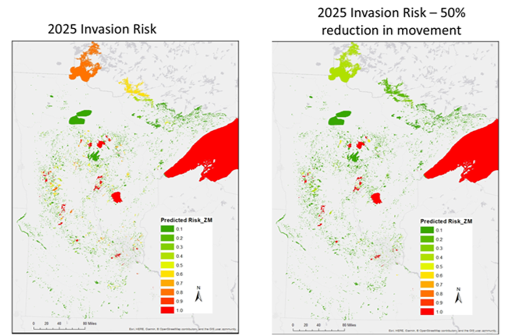
To investigate how aquatic organisms move between lakes, I participated in the construction of a network model that analyzed the connectivity of lakes, and subsequent risk of aquatic invasive species spread, based on the movements of recreational boaters. We found that infested lakes had a greater degree of connectivity in our network, and that boaters who had visited infested lakes had a high probability of visiting other lakes in the network.
Over the course of this project, I used machine learning to interpolate data for lakes that had missing boater movement data. Our models correctly predicted the subsequent invasion of a lake by zebra mussels (Dreissena polymorpha), which are spread by microscopic veligers in retained water from recreational and commercial vessels.
The boater network model is published here: https://link.springer.com/article/10.1007/s10530-021-02563-y

