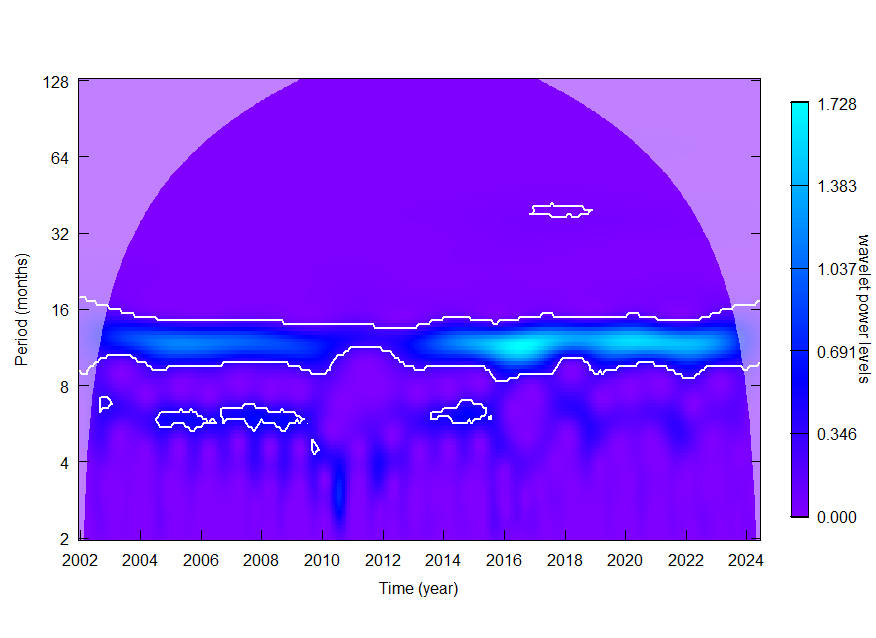
My research has also incorporated the variation in physical and biological characteristics of aquatic systems across temporal scales.
We have analyzed a 20 year-long epidemiological dataset using cross-wavelet transformation analysis to understand how long-term shifts in environmental characteristics drive inter-annual changes in shrimp black gill (sBG) prevalence. We found that seasonal epidemics have increased in magnitude and duration over the course of the time series, and that temperature was the most highly correlated variable to these shifting patterns while shrimp density metrics were only weakly correlated. These findings reinforced the conclusion that sBG dynamics are primarily driven by changes to water temperature, both at a within- and between- year time scale.
 Aquatic Disease Ecology in a Changing World